Mostrando entradas con la etiqueta Listening. Mostrar todas las entradas

1/26/2015

Small Talk


Finding Things to Talk About
Start a Conversation When You Have Nothing to Talk About Step 1 Version 2.jpg

1
Remark on the location or occasion. Look around and see if there is anything worth pointing out. Examples of location or occasion comments: "This is a gorgeous room!", "Such incredible catering!", "I love this view!", or "Great dog!"

Start a Conversation When You Have Nothing to Talk About Step 2 Version 2.jpg

2
Ask an open-ended question. Most people love to talk about themselves; it's your place as the conversation starter to get them going. An open question requires an explanation for an answer rather than just a simple yes or no. Open questions tend to begin with who, when, what, why, where, and how, whereas closed questions tend to start with do, have, and is/am/are.
  • Closed questions: "Do you like books?", "Have you ever been to this university?", "Is spring your favorite season?", "Am I intruding?", and "Do you come here often?"
  • Open questions: "What sort of books do you like?", "What did you study here at this university?", "Which is your favorite season? Why?", "What are you doing right now?"
Start a Conversation When You Have Nothing to Talk About Step 3.jpg

3
Know how to combine general remarks with open-ended questions. Since either one of these might be awkward or out-of-place on its own, combine them for maximum effect. For example:
  • "That's a nice handbag, where did you get it?" This lets the handbag owner talk about the day that they went shopping and all this funny stuff happened, as opposed to: "I like your handbag!" "Thank you." (The end.)
  • "What an amazing buffet! Which is your favorite dish?" Asking an opinion is especially useful, as it can be followed up with the classic open-ended question: “Why?”
  • "Fantastic turnout! Which of the lecturers is your favorite?"
  • "I love your costume. What are your favorite sci-fi movies?"
Start a Conversation When You Have Nothing to Talk About Step 4 Version 2.jpg

4
Ask them about their pets. Animals are often common ground with people you have nothing else in common with. If you like animals in general, it's easy to relate to other animal lovers whether they prefer dogs, horses, birds, cats or wildlife. While talking about your own pet might be annoying to some people, asking them about their pets is a great way to get people to open up and start having fun.

Start a Conversation When You Have Nothing to Talk About Step 5.jpg

5
Brush up on current events. Chances are they'll know about it too and if they don't then that's a good thing to talk about! Read or watch the news and when you're ready to start a conversation with someone, say something like, "Hey, did you hear about that helicopter crash? That was pretty crazy."

Start a Conversation When You Have Nothing to Talk About Step 6 Version 2.jpg

6
Draw on previous discussions. If you know the person, review a mental list of topics you’ve discussed previously and continue on one of them.  For example, their kid’s milestone, one of their projects, or some bad news that they shared with you. This not only gives you something to talk about, but it also shows that you pay attention when you talk to them and you care about their problems and experiences enough to think about and remember them.

Start a Conversation When You Have Nothing to Talk About Step 7.jpg

7
Ask questions that are easy to answer. Some questions are a little harder to answer than others.  Has someone ever asked you your weekend plans and you thought, "I don't want to think about my weekend plans... do I really have to answer that?"  Most people prefer easy questions, like "what are you up to today," or "is school killing you these days?" This should make conversations flow better and feel more comfortable.

Start a Conversation When You Have Nothing to Talk About Step 8 Version 2.jpg

8
Be sensitive to their feelings. Keep your questions non-invasive. Be sure you're not asking them questions about topics they'd rather not discuss. For example, some people might be very uncomfortable discussing issues that they feel touch on them personally, such as weight, lack of having a degree or qualifications, lack of having a steady date, etc. Try to be as thoughtful as possible even though you don't really know them yet.

Full text HERE - WikiHow

Topics for Small Talk Conversation for all occasions

1. Hello/Hi: A simple hello is good way to start any small talk; a basic greeting of mutual acknowledgement.
2. Introduction: If meeting for the first time, make sure to introduce yourself. It shows your interest in the meeting, and put a name to the face.
3. Situation and surroundings: Talk about the surroundings or the venue: ‘Nice place, huh!’ or ‘I like this cafe!’
4. Weather talk: This is all time classic, may be a bit too much used. However, a talk about weather always gets the conversation started.
5. How was your day? : If the meeting is in the late day or in the evening, talk about how your day was, there is always something to share: ‘how is your day going so far?’
6. So what are you up to today/tonight? : Ask about short term plans for the day, or the night or the next day. This is always good way to keep the chit-chat alive.
7. Talk about traffic: ‘How was the traffic on your way over?’ or ‘how did you get here?’
8. Give compliments: ‘Nice dress’ or Nice car’ or ‘ a nice house’…say something nice. It makes the other side feel at ease and warms up the talk.
9. How is school/work: The school or work topics are always good; people love to complain about work or school. :)
10, Sports: It is not only guys’ things anymore, women enjoy the sports equally. The trick is to find out -‘So, what kind of sports do you watch/play?’
11. Current news: Talk about current topics in the news – sports, headlines or any other current topics that your company may be interested in.
12. Family talk: If appropriate, e.g. among family friends, talk about your parents, kids, family vacation etc. Family friends can always have tons to chit-chat about.
13. Mutual friends: Talk about mutual friends, or friends of friends. Be positive, saying bad stuff behind someone’s back reflects poorly on you.
14. Drinks and Food: If you are invited over for a party, or if meeting someone over a drink or a meal, you can always talk about the food or the menu or the drinks being served,
15. Music, TV, movies comments: ‘Have you watched any movie lately?’ Or ‘Did you watch the Late Night Show last night?’ and so on…
16. Discuss hobbies: Talk about your hobbies, find out what your company likes to do in the free time. Exchange ideas on any common interests you share.
17. Talk about environment: It is the new fashion – a new trend, to be environment friendly. You can always talk about new initiatives or ideas about saving environment.
18. Travel talk: Talk about travel or vacation or a trip. ‘Any plans to go out-of-town this year?’
19. Share a funny anecdote or a joke: If appropriate for the occasion and if you feel comfortable, share some funny story or a joke to lighten up the mood.
20. Tech Stuff or new Gadgets:Talk about new toys – new cell phones, iPods, iPhones, new computers, new applications, Face-book, .All of us have some new gadgets or computer applications that we like and love to talk about.


12/24/2014

Mr Bean

Mr. Bean was a British comedy television series of 14 episodes. The first episode was broadcast on 1 January 1990 and the final episode, "Hair by Mr. Bean of London", on 25 August, 1996. During its five year run the series gained large UK audience figures, and has been the recipient of a number of international awards.
Mr Bean was played by Rowan Atkinson, an English comedian, actor and writer.

Watch “Merry Christmas Mr. Bean” (1992). Have fun!


12/23/2014

Christmas

How do people feel about Christmas?

Listen and read.


Listening by ELLLO, a free online listening resource of over 1,000 listening activities designed especially for ESL and EFL students and teachers. Most listening activities include images, an interactive quiz, transcript of the audio and downloadable MP3.

7/01/2014

Princess Diana


1 July 1961 – 31 August 1997


2/22/2014

Poverty

"Saltwater" is a 1991 song performed by English singer, songwriter, and musician Julian Lennon. It was written by Mark Spiro, Leslie Spiro and Julian Lennon.


What problems are mentioned in the song?
What problems do poor people have?
Does poverty cause crime?
Will there always be poverty in the world?
Have you ever helped a homeless person? How?
Do you think the government should create jobs for the homeless, instead of just giving them money?
How can poverty be ended?
Aristotle said: "Poverty is the parent of revolution and crime." What do you think?

2/21/2014

The Importance of Learning a Foreign Language


These videos are just for fun but I think learning languages is essential and invaluable.


Languages are a passport to another world.
With a language you can get to know and get involved with the culture. You can meet people from that country and talk to anyone you may meet on the street. You can ask for directions and know what you’re ordering in a restaurant. You can go beneath the surface of the tourist aspect and discover the true secrets about a country and how it works.


A lot of things are “lost in translation”.
If you have ever read a translation in your native language that has been translated from another language and the looked at the original, you will know this. Some of the translations are very embarrassing! There are a lot of idiomatic phrases that cannot be translated because they only make sense in that language. Things like humour and play on words can also only be appreciated in the original language.
 
Physiological studies have found that speaking two or more languages is a great asset to the cognitive process. The brains of bilingual people operate differently than single language speakers, and these differences offer several mental benefits.
You become smarterSpeaking a foreign language improves the functionality of your brain by challenging it to recognise, negotiate meaning, and communicate in different language systems. This skill boosts your ability to negotiate meaning in other problem-solving tasks as well.
You build multitasking skillsMultilingual people, especially children, are skilled at switching between two systems of speech, writing, and structure. According to a study from the Pennsylvania State University, this “juggling” skill makes them good multitaskers, because they can easily switch between different structures. In one study, participants used a driving simulator while doing separate, distracting tasks at the same time. The research found that people who spoke more than one language made fewer errors in their driving.
You stave off Alzheimer’s and dementiaSeveral studies have been conducted on this topic, and the results are consistent. For monolingual adults, the mean age for the first signs of dementia is 71.4. For adults who speak two or more languages, the mean age for those first signs is 75.5. Studies considered factors such as education level, income level, gender, and physical health, but the results were consistent.
Your memory improvesEducators often liken the brain to a muscle, because it functions better with exercise. Learning a language involves memorising rules and vocabulary, which helps strengthen that mental “muscle.” This exercise improves overall memory, which means that multiple language speakers are better at remembering lists or sequences. Studies show that bilinguals are better at retaining shopping lists, names, and directions.
You become more perceptivestudy from Spain’s University of Pompeu Fabra revealed that multilingual people are better at observing their surroundings. They are more adept at focusing on relevant information and editing out the irrelevant. They’re also better at spotting misleading information. Is it any surprise that Sherlock Holmes and Hercule Poirot are skilled polyglots?

The Telegraph 

1/27/2014

ROALD DAHL

Roald Dahl (13 September 1916 – 23 November 1990) was a British novelist, short story author and screenwriter. He was born in Llandaff, South Wales. During the second world war, he fought as a fighter pilot, and was badly injured when his plane crashed. As a result, he spent sixteen weeks in a German hospital. After the war, he worked in America, and soon started writing stories. He was famous as a writer for both children and adults. However, some critics considered his work too violent for children.

His most popular books include Charlie and the Chocolate Factory, James and the Giant Peach, Matilda, The Witches and The BFG, The Gremlins

Roald Dahl Quotes

And above all, watch with glittering eyes the whole world around you because the greatest secrets are always hidden in the most unlikely places. Those who don't believe in magic will never find it.
Some children are spoiled and it is not their fault, it is their parents.

Watch this video and answer the questions.
(Elementary)


1. Do Matilda's parents love her?
2. Is her father a good driver?
3. Do they pay attention to her?
4. What does her father do?
5. What can she cook?
6. What does she want?
7. Matilda’s father doesn’t want her to read books. What does he like?
8. Where does Matilda go every day?

Answers:

1. No, they don’t.
2. No, he isn’t.
3. No, they don’t.
4. He buys and sells cars.
5. She can cook pancakes.
6. She wants a book.
7. He likes watching TV.
8. She goes to the library.


Read the following story and answer the questions.
(Upper intermediate students)Lamb to the Slaughter

Was Mrs Maloney happily married? Why (not)?
What was Mr Maloney’s routine in the evening?
What did Mr Maloney announce?
Why did he say “it’s a bad time to be telling you”?
Was Mrs Maloney afraid of what would happen to her?
How does Mary Maloney create the alibi?
Do you think the murder was a crime of passion or premeditated?
Did she react in a normal way? Why (not)?

1/22/2014

Classic Audio Stories for Children

Listen to the stories while you read the text.


GOLDILOCKS AND THE THREE BEARS
(Brothers Grimm)
Click HERE


LITTLE RED RIDING HOOD
(Brothers Grimm)
Click HERE.


Visit Cuentos para Chicos and go on reading wonderful stories.

1/18/2014

Stonehenge

Stonehenge is a prehistoric monument which is located in the English county of Wiltshire. It is one of the most famous prehistoric places in the world and the site and its surroundings were added to the UNESCO's list of World Heritage Sites in 1986.
An excavation is taking place inside Stonehenge for the first time in over four decades.


“The first excavation for more than a generation at Stonehenge began yesterday, looking for evidence that the most famous prehistoric monument in the world was the Lourdes of the bronze age, where the sick and troubled sought healing from the supernatural power of bluestones brought from west Wales.” The Guardian (UK) 04/01/08. Read the complete article here.

1/10/2014

Ghosts


Many people don’t believe in ghosts because they have a scientific point of view. For them, the world is governed by laws that have been discovered or, at least, are discoverable by scientific investigation. One thing is certain: lots of paranormal phenomena do happen to ordinary people all over the world. 


  1. Do you think that dead people come back to haunt the world? 
  2. Have you ever had any paranormal experiences or ghost encounters? 
  3. Have you ever used a Ouija board? Did it freak you out? 
  4. Would you talk to a ghost? 
  5. Do you know any good stories about ghosts? 
  6. Do you know anyone who has said that they have seen a ghost? 
  7. If one of your friends told you they had seen a ghost, would you believe him/her? Why/Why not? 
  8. Is there an area where you live (park, house, etc.) that is known to be haunted? 
  9. Would you spend the night in a place where people say that there are ghosts?


Dave Allen, an Irish comedian, explains how he lost his finger. Watch the video and answer the questions.


  1. Where did the story take place? 
  2. Did Dave believe in ghosts stories? 
  3. What type of bet did he accept? 
  4. What did he feel when he woke up? 
  5. Was he afraid?
  6. How did he lose his finger?


 You can read the story.

 "Many years ago I was rather foolish. We were in the west coast of Ireland and we were in a barn and we'd had a couple of drinks and somebody started to talk about the unknown and the spirit world. And the conversation came up about the gravedigger's house and the locals started to tell us about it. This gravedigger was found in his bed, dead, with terrible marks on his neck and his eyes wide open. The doctor said the marks had nothing to do with his death but that the man had died of fright. And... I scoffed (= laughed at), foolishly.
And it came about with a few more drinks that I accepted a dare or a bet that I would stay the night in the cottage beside the graveyard. I went there and we agreed that the door would be locked and I would stay in there until first light and I was locked in.
I don't know really what happens but I think a great deal of fear is in one's mind. It was dank (= humid and cold). It was cold. The effects of the booze (= alcohol) began to wear off and I began to think, "What in the name of God are you doing here?" And I felt... I don't know what it was. It was an instinct. It was something stronger than me pulled me towards this bed where this man had died. And I was drawn... I fought against it but I was drawn nearer and nearer to this bed. And I was told somehow or other to sit on that bed. I didn't want to... and I did. An unnatural drowsiness (= sleepiness) came over me and I became very sleepy... and I lay down knowing full well that I shouldn't... and I went to sleep. A limbo sleep.
I awoke. What time I have no idea. The candle had burnt down. It was black. It was cold and I felt a presence. I was completely sober by then and utterly terrified. The hackles (= hair) on the back of my neck had begun to rise. I was paralysed by a presence of fear. I felt something on my chest begin to move. It crept slowly up my chest... and I couldn't move. It came closer and closer to my throat. I gathered all my willpower (= mental strength)... as this thing came closer... and nearer... and I grabbed it! And it was wet and cold and I bit it! I screamed in pain!
And that is how I lost my finger."

Visit the following site:


Hampton Court Ghost


Paranormal Activity ... Watch this funny video.

THE CURSE OF THE PHARAOHS


In 1922, the tomb of Tutankhamun was opened. Some terrible words were found there: “Death will come to those who disturb the sleep of the Pharaoh”

Over the years that followed, several people that took part of the expedition lost their lives and really strange things happened. Curse or coincidence?

Lord Carnarvon, the man who led the expedition, died as a result of a mosquito bite which was in the same place as a mark on the body of Tutankhamun. The moment he died, the lights went out all over Cairo.

Soon afterwards, Arthur Mace, another member of the expedition, suddenly went into a coma and died.

George Gould, Carnarvon’s close friend visited Tut’s tomb and died the following day after having a high fever.

Archivald Reid, the radiologist who x-rayed the mummy, died shortly afterwards.

Richard Bethell, Carnarvon’s secretary, died form a heart failure.

The case of Richard Adamson, who slept in the tomb, was really bizarre. On three occasions, he said he didn’t believe in the curse of King Tut. He lost his wife within 24 hours of speaking out against the curse. When he spoke out again, his son broke his back in an aircraft crash. After giving an interview on TV, in which he said he still didn’t believe in the curse, his taxi crashed and he was taken to hospital with fractures and bruises. Then he said: “Until now I refused to believe that my family’s misfortunes had anything to do with the curse. But now I am not so sure.”

Tutankhamun’s mummy was not the only one involved in mysterious deaths. In 1922, an Egyptian mummy – Akhenaton’s prophetess – was crossing the Atlantic and unfortunately, the ship with its valuable cargo sank. Can you imagine the name of the ship? Yes, it was the Titanic.

The mystery remains. The curse may be fact or fiction. The truth is that this story seems to interest people all over the world.

Do you believe in the curse of the mummy? I will leave that for you to decide.

King Tut's New Face


Forensic sculptor Elisabeth Daynhs used tissue-depth information to lay clay over plastic skull models. She then added layers of fleshlike silicone, estimating the king s eyebrow thickness and approximate shape and size of the nose, lips, and ears.


Depression

Listen to the story


You can also read the book (from The search for a happy reverie)
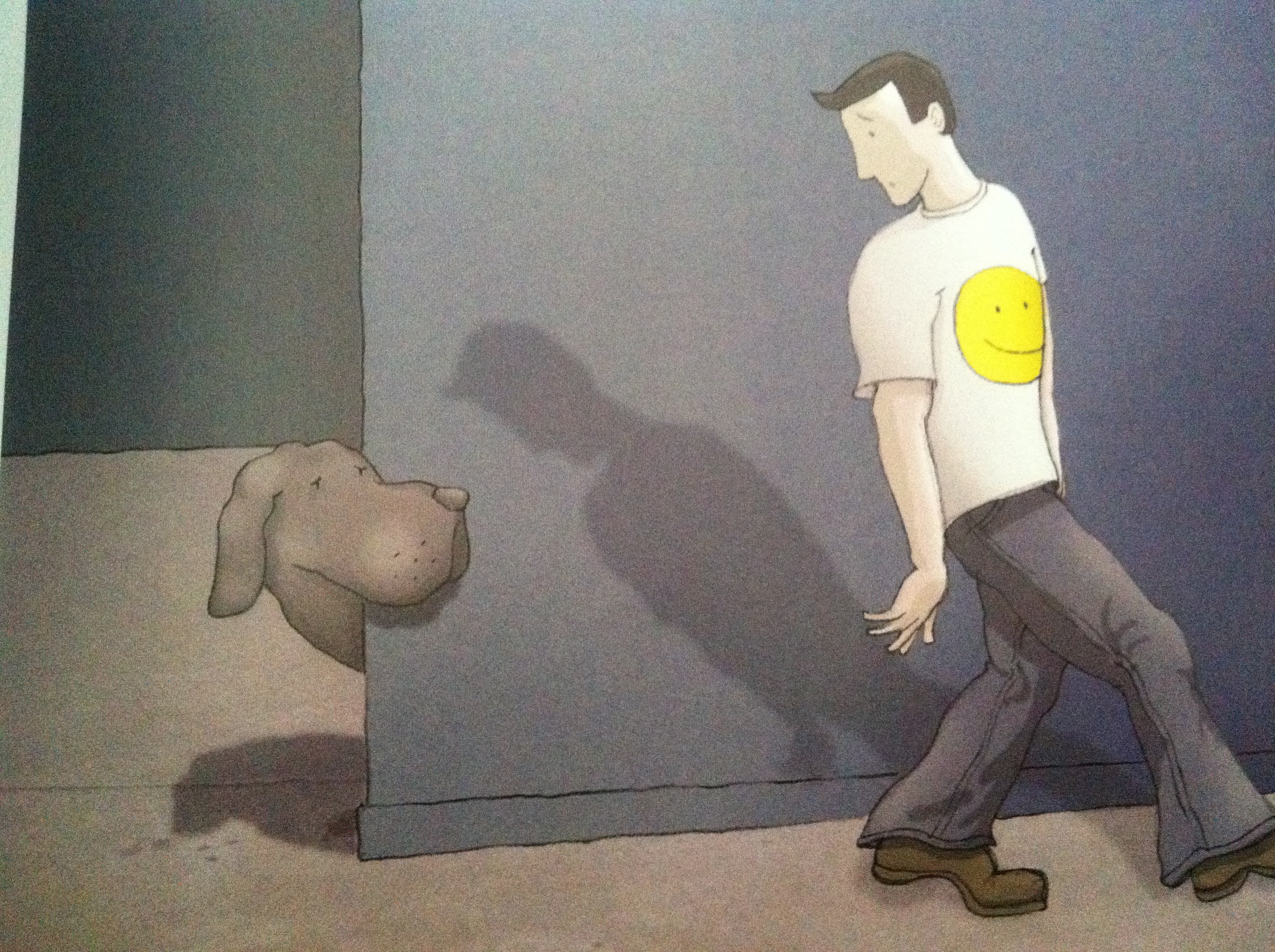
Living with a Black Dog: His name is Depression
1. People who’ve had a Black Dog in their lives often say that in retrospect, “the Dog” probably had been sniffing around for a long time. They just didn’t have the understanding and knowledge to give it a name. All they knew was that when he appeared, he could suck the joy out of life quicker than you could say “woof woof”.
4. While the rest of the world seems to be enjoying life, you can only see it through the Black Dog.
7. A Black Dog can seriously affect your memory and ability to concentrate.
8. Doing anything or going anywhere with him requires superhuman strength.
9. If your Black Dog follows you to a social occasion, there’s a good chance he will sniff out whatever confidence you have and chase it away.
16. There are different degrees of feeling when you have a Black Dog in your life. At one end of the scale you may feel sad, flat, teary, or blue, and at the other, you are devoid of feeling altogether, and life is overwhelmingly difficult.
11. If left unchecked, a Black Dog can become a serious problem. It gets bigger and likes to hang around all the time. Occasionally, you may find the energy to take him on and, hopefully, send him running.
12. but depending on the severity and size of your black dog, he may come out on top
 and getting up again will seem futile. It’s not unlike getting into the ring with a professional wrestler. If you don’t like getting hurt, it feels safest staying down. That can become a big problem, because you never get out of the ring.
18. You will quickly discover that there are many different breeds of Black Dog affecting millions of people from all walks of life. The Black Dog is an equal-opportunity mongrel.
22. A Black Dog feeds on stress and fatigue; the more stressed you get, the louder he barks. It’s important to learn how to rest properly and quiet your mind. Yoga, meditation, and being in nature can help shut out the dog.
23. A Black Dog is fat and lazy; he wants you to lie on your bed and feel sorry for yourself. He hates exercise, mostly because it makes you feel better. When you least feel like moving, that’s when you should move the most.
So go for a walk or run and leave the mutt behind.
25. The most important thing to remember is that no matter how bad it gets,
26. if you take the right steps, Black Dog days can and will pass.
27. No one would ever say he was grateful for having a Black Dog in his life. But a negative experience can often help you find a more positive one. Reevaluating and simplfying your life can only be beneficial. Learning to acknowledge and even embrace your problems can have surprisingly good outcomes.

28. It is possible that a Black Dog may always be a part of your life, but with patience, humor, knowledge and discipline, even the worst Black Dog can be made to heel. 

 You will quickly discover that there are many different breeds of Black Dog affecting millions of people from all walks of life. The Black Dog is an equal-opportunity mongrel.

Take the Depression Test

Superstitions


Are you superstitious? Probably, the answer is: NO! … But do you walk under ladders or open an umbrella indoors?

Let’s see some traditional superstitions.

Numbers
From Dvorscak(A hotel did not have a floor numbered 13)

Chinese think that whereas 4 and 14 are unlucky numbers (4 sounds like “die” and 14 sounds like “must die”), 8 and 18 are lucky numbers because they sound like the word “rich”.
13 is considered an unlucky number in many cultures. According to Christian traditions, there were 13 people at the Last Supper and Judas, the traitor was the 13th to sit at the table.
There is a phobia connected to number 13, called triskaidekaphobia. Because of this fear, many buildings don’t have an official 13th floor and many people don’t like having a party with 13 guests.
It is said that if you have 13 letters in your name, you will have the devil’s luck. (Charles Manson, Jack the Riper)

Why is Friday 13th unlucky?
Adam and Eve left the Garden of Eden on a Friday. Jesus Christ died on a Friday. In pagan Rome, Friday was an execution day and later, in Britain, they killed criminals on a Friday.
In Greece, as well as in Spanish-speaking countries, Tuesday is an unlucky day instead of Friday. (The Fall of Constantinople took place on a Tuesday)
In Argentina, we have a proverb that says “En martes, no te cases ni te embarques” which means that on Tuesday, neither get married nor start a journey.

Weddings

There are many superstitions and traditions associated with weddings.

The bride should have something old, something new, something borrowed and something blue in order to have a happy marriage.

The colour of the dress is also important. White dresses were made popular by Queen Victoria, who broke the tradition of royals marrying in silver. White symbolizes purity and virginity.

Married in White, you have chosen right,

Married in Grey, you will go far away,

Married in Black, you will wish yourself back,

Married in Red, you will wish yourself dead,

Married in Green, ashamed to be seen,

Married in Blue, you will always be true,

Married in Pearl, you will live in a whirl,

Married in Yellow, ashamed of your fellow,

Married in Brown, you will live in the town,

Married in Pink, you spirit will sink.

The bride must enter her house by the main door and must not fall. That is why the groom carries the bride over the threshold.


Good luck superstitions

1) The person who finds a four-leaf clover is believed to be lucky

2) Wishbones: When two people pull apart a breastbone of a chicken or turkey, the one who is left with the longer end will have his wish come true.

3) A horseshoe, hung above the doorway, will bring good luck to a home.

4) If your palm itches, you will receive money.

5) Some people touch wood when they want something good to continue. Others cross their fingers when they want to have good luck.

6) Good luck charms, like the rabbit’s foot, bring good luck.


Bad luck superstitions
1) Walking under a ladder.

2) Getting out of bed left foot first.

3) Opening an umbrella indoors.

4) Breaking a mirror brings 7 years of bad luck. To break the spell of misfortune you must wait 7 hours before picking up the broken pieces and bury them outside in the moonlight.

5) If you spill salt, you will be unlucky unless you throw a pinch over your shoulder.


Animals


frog or a cricket can bring good luck to a home.

Bats are associated with evil in some countries, because the represent the devil, a ghost or Dracula. In China, a bat means long life and happiness.

Black cats are unlucky in some countries. It is said that Napoleon saw a black cat before the battle of Waterloo. He lost the battle and the British won. So the black cat is unlucky on the continent whereas in Britain, it is lucky.

ladybug is a sign of good fortune.

I’m not superstitious… but on second thoughts…I’d better touch wood and keep my fingers crossed.

Try the following quizzes on superstitions:

http://www.funtrivia.com/playquiz/quiz98497b48f80.html

http://www.funtrivia.com/trivia-quiz/General/Myths-Vampires--The-Undead-90883.html


Home - Video


Watch this free movie about our planet and ecology from the world famous French photographer Yann Arthus Bertrand. Click here.